


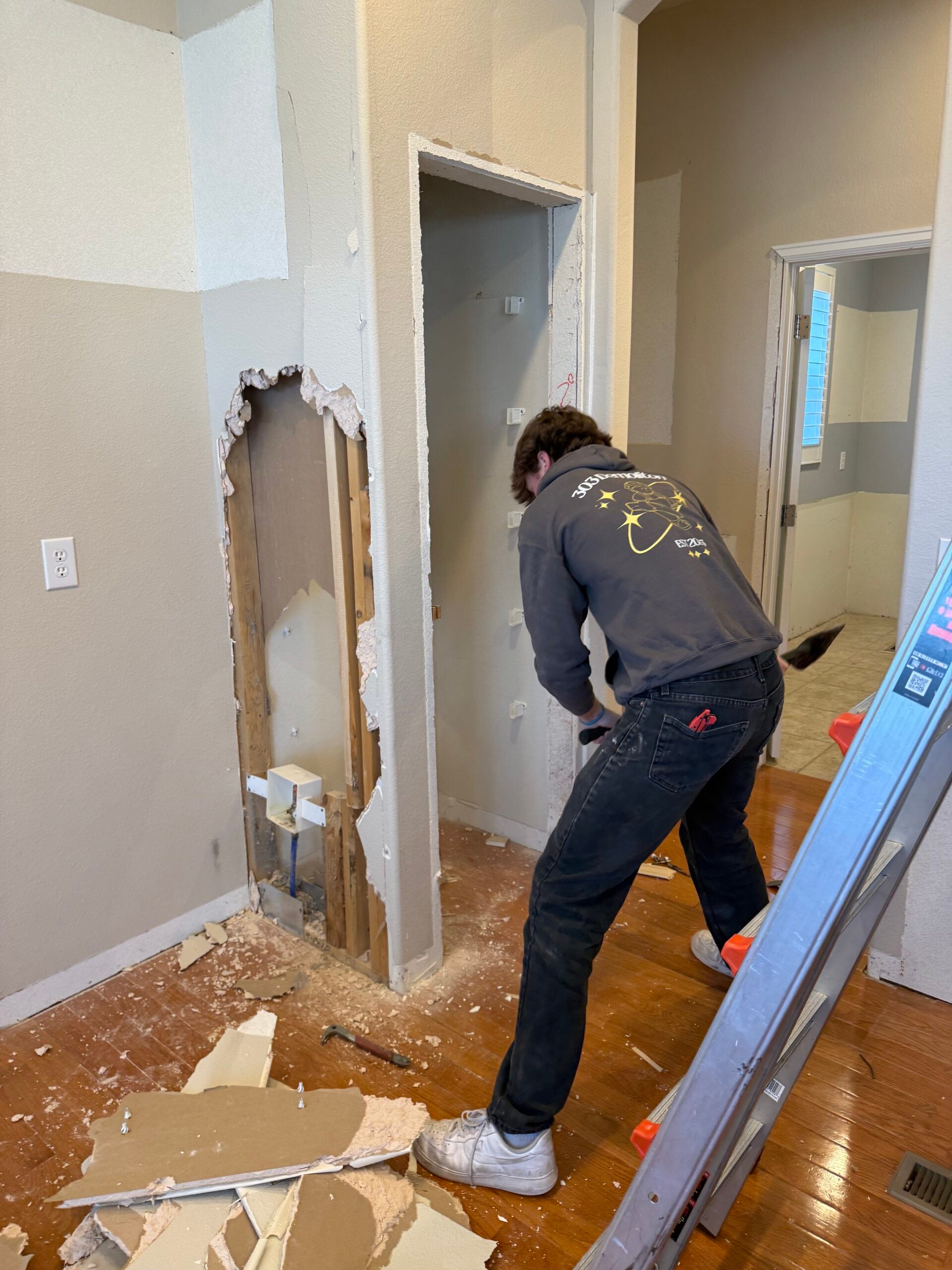
One Crew for the Tear-Out and the Haul-Off
- No dumpster, no second company Debris goes straight into the truck as we work. No landfill runs on your Saturday.
- A price before anything gets touched We walk the room, look at the access path, and quote it. Free.
- Protection for what stays Plastic over doorways, coverings on floors you are keeping, dust control while we work.
- A swept room, not a pile in the driveway The space is clear and ready for the next trade when we leave.
Is Drywall Removal Part of a Boulder Tear-Out?
Yes, and in Boulder it is the most common piece of the job.
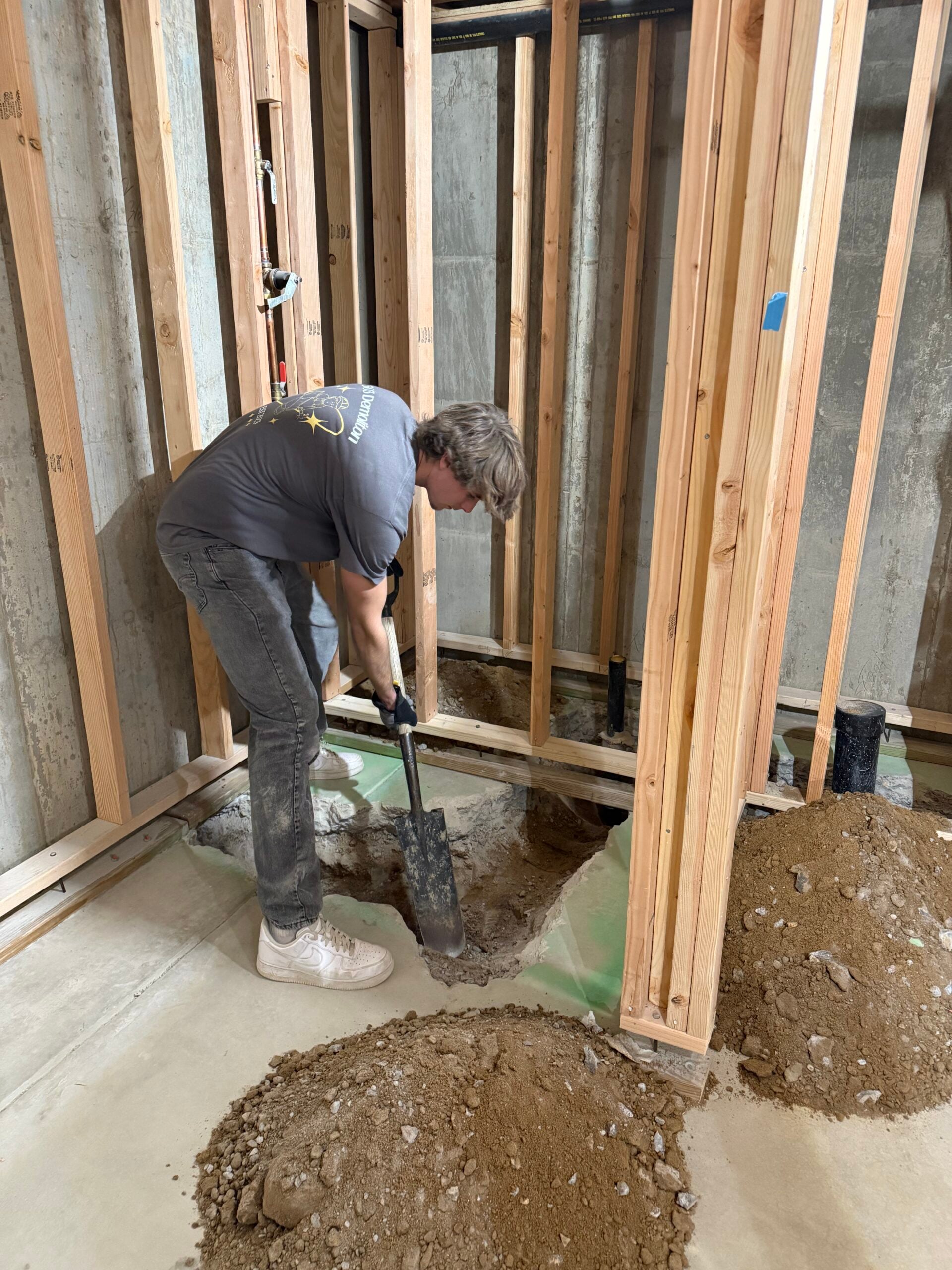
Pulling drywall opens access to plumbing, wiring, and insulation, and leaves a clean surface for new framing or finishes. We remove it carefully so the framing and utility runs behind it stay intact, then bag and haul every piece out with the same crew.
Older Boulder housing stock makes this trickier than people expect. Plenty of homes near University Hill and the Whittier blocks were built before the 1950s, so you get plaster over wood lath instead of drywall. That comes down heavy, dusty, and slow. It is a different job than a 2005 build and we plan for it before we show up.
Drywall removal is usually one part of a bigger project. It shows up in kitchen demolition and bathroom demolition work, and we coordinate around your other trades.
When Do Boulder Homeowners Need a Tear-Out Crew?
Most people do not call on day one. They call on day three, when the trash bags are stacked by the door and the dumpster is already full.
-
Plaster and lath, not drywall
Common in pre-1950s Boulder homes. Heavy, dusty, and slow to bring down.
-
Tile set in a mortar bed
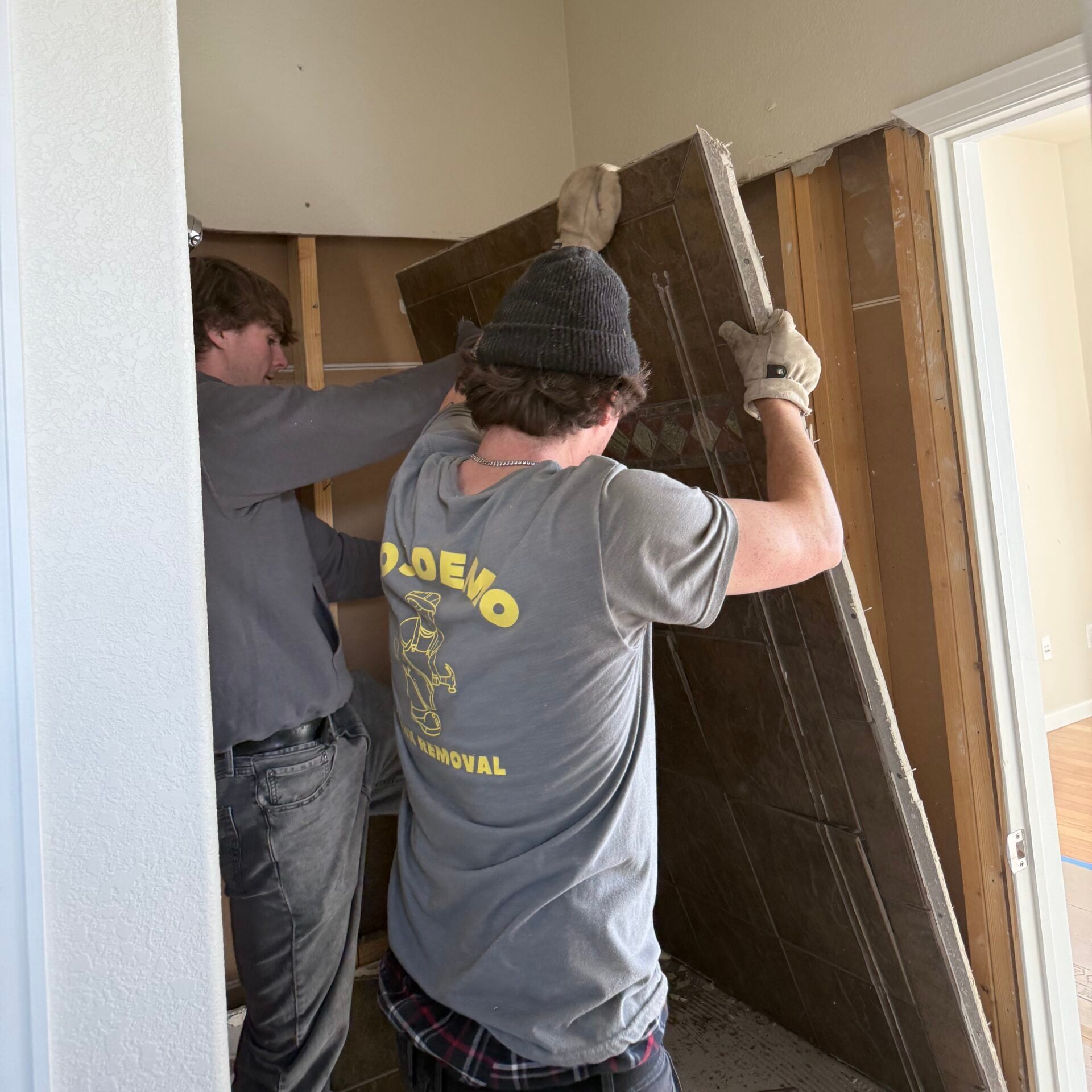
If the tile will not pop loose there is a concrete layer under it. Different tool, different weight class.
-
More than one room at once
Debris piles up faster than one person can carry it out.
-
A tight timeline
If framing starts Monday, the tear-out cannot drag into next week.
-
Stairs, no driveway, shared alley
In older neighborhoods, getting debris out of the building is half the job.
-
The surprises start
Old wiring stapled inside a wall. A hidden pipe run. Soft subfloor. The pace drops and the pile grows.
Demolition is not hard because of the swinging. It is hard because of what is left on the floor afterward. A single kitchen tear-out can fill a pickup four or five times over, and that is before the cabinets.
When Should You Skip the Crew and Do It Yourself?
Skip us when you can get the debris off your property yourself.
One small bathroom’s worth of vinyl flooring, a single vanity, a closet shelf system, a laminate countertop. Those come out with hand tools and fit in a pickup bed. Hiring anyone for that is spending money you do not need to spend.
Timing matters too. If your contractor has not pulled permits and the cabinets are still on order, do not rush the demo. An open wall sitting for six weeks is a hole collecting dust, and Boulder winters run dry and cold. An exposed exterior wall bleeds heat fast. Wait until the next trade is ready to walk in.
What Goes Wrong When a Tear-Out Is Rushed?
Damaged plumbing lines, cut wiring, and weakened structural supports, mostly. Every one of those turns a demo saving into a repair bill.
-
Load-bearing walls
Identified before the first wall comes down. We will say straight out if your contractor or an engineer has to weigh in first.
-
Live wiring and gas lines
We do not touch either without a plan. Utility runs get mapped before anything gets opened.
-
Anything needing a permit
Flagged up front rather than discovered on demo day, when it costs you a week.
We identify load-bearing walls, utility runs, and anything that has to stay before work starts, then protect the parts of the house that are not part of the job.
Do You Need a Permit to Gut a Room in Boulder?
It depends on what is coming out and how much of it.
Cabinets, fixtures, and non-load-bearing walls are a different question from anything structural. What surprises most Boulder homeowners is the asbestos rule. The City of Boulder and CDPHE require a certified asbestos inspection for any structure regardless of age once the project passes the trigger levels.
- 32 square feet of surfacing material such as drywall or flooring
- 50 linear feet of pipe insulation
- The equivalent of a 55-gallon drum of waste
A single room of flooring can cross that line. Structures over 50 years old carry a separate consideration in the City of Boulder, so anything in the older neighborhoods is worth checking early rather than on demo day.
Where the inspection sits
The inspection and any abatement are handled by state-certified specialists, not by a demolition crew. We flag when your project looks likely to cross a trigger level so it does not stall your schedule.
The CDPHE Asbestos Compliance Assistance Group can be reached at 303-692-3100.
How Is a Boulder Tear-Out Priced?
Either a flat price for a defined scope, or by the volume of debris hauled out. The tear-out is often the cheap half. Hauling and dumping is where the money goes.
-
Material weight
Concrete, mortar-bed tile, and old lath and plaster cost more to haul than drywall or carpet.
-
Access
A third-floor Boulder condo walk-up means every load goes down stairs by hand.
-
Age of the home
Older Boulder houses often have plaster over lath and layered flooring stacked on top of each other.
-
Selective versus full tear-out
Saving cabinets or trim takes hand work and time. A full gut moves faster per square foot.
Landfills and transfer stations charge by weight. A small bathroom can outweigh a large room of drywall, so the disposal bill follows the scale, not the square footage. That is why a tile shower quote and a drywall wall quote look so different.
Homeowners often bundle flooring removal into the same visit. One mobilization, one bill.
Tear-Outs Across Boulder County
-
Boulder County
Boulder, Longmont, Lafayette, Louisville, Superior, Broomfield, Erie, and Niwot.
-
Fully insured in Colorado
Locally owned, working across the Front Range since 2023. Free on-site estimates.
-
Selective or full gut
One room or the whole floor plan. See all our demolition services.